
As the demands on veterinary teams continue to grow, Dr. Emily Whitehouse knew that working smarter, not harder, meant adopting AI tools that truly fit the pace of a busy clinic.
Walk into Lone Tree Animal Care Center in Omaha, NE, and it’s immediately clear that pets are cared for by a team of compassionate and skilled animal lovers. This full-service, independent practice is owned and led by Dr. Whitehouse, who prioritizes both excellent medicine for pets and sustainable workflows for her team.
The Downfall of a Disconnected AI Workflow
Before Daisy Voice was available, Dr. Whitehouse’s team used a veterinary AI dictation tool that was not native to DaySmart Vet practice management software (PIMS). They relied on a third-party AI scribe that produced transcripts, but the process of getting those notes into their PIMS felt cumbersome and disconnected.
The AI-generated SOAP notes had to be copied and pasted into different sections of patient records every single time. That extra step created friction throughout the day and made it easy for documentation to pile up and remain unfinished.
“The SOAP note transcriptions never left this other tool,” Dr. Whitehouse shared.
The issue wasn’t whether AI worked. It was whether it worked within the reality of a busy clinic.
AI Works Better When It Is Native to the PIMS
When Daisy Voice was released, Dr. Whitehouse knew it was worth trying because it lived directly inside her DaySmart Vet PIMS.
Instead of juggling systems or moving information between platforms, transcribed visit recordings could now flow straight into the patient’s SOAP note. Team members could pause recordings, step away, move within the PIMS, and return without losing progress or context. All recordings began being stored directly within the patient’s record for easy access and review. SOAP notes were being completed. No copying and pasting, exporting, or moving between online tools required.
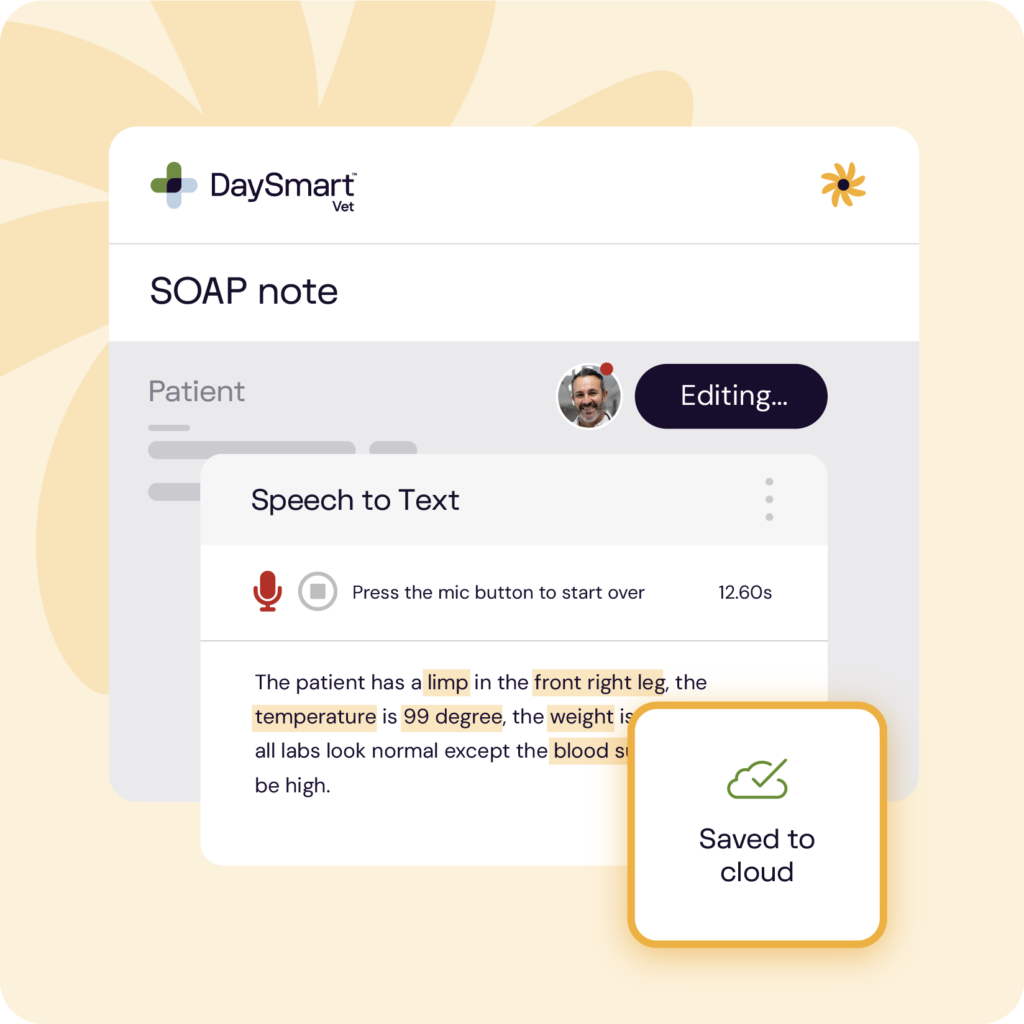
“I love that Daisy Voice is within DaySmart,” Dr. Whitehouse said. “The recording will be right there if we need to leave and come back.”
Using AI for Vet SOAP Notes in Practice
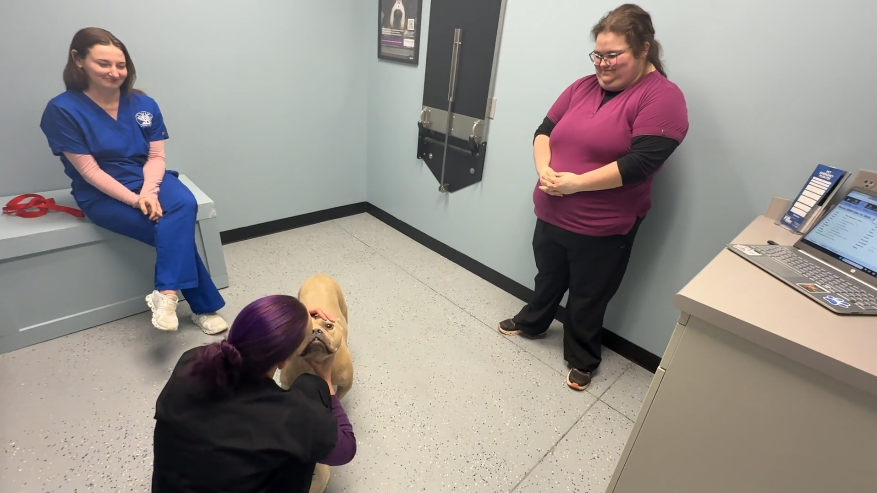
Daisy Voice is used in nearly all exams with pet parents present at Lone Tree. Their workflow is simple and repeatable:
- A veterinary technician enters the exam room and starts the recording to gather intake information
- The recording is paused while they retrieve the veterinarian
- Once the veterinarian is present, the recording resumes with a single click
- After the visit, a team member reviews and finalizes the SOAP note
Adoption of Daisy Voice was smooth for the Lone Tree team. Dr. Whitehouse began using Daisy Voice herself and gradually expanded it across the practice. Veterinarians and technicians both comfortably interact with Daisy Voice during the exam process, making documentation more collaborative and accurate.
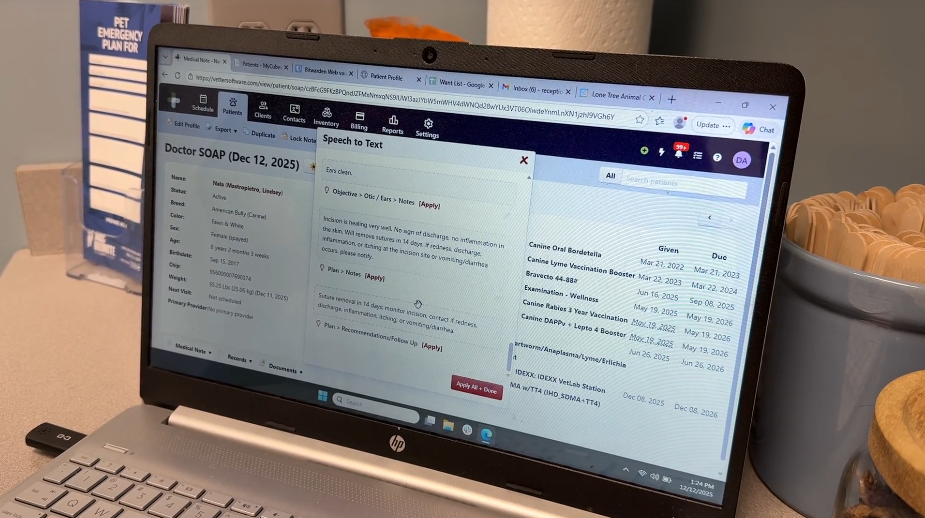
Daisy Voice accurately organizes content into Subjective, Objective, Assessment, and Plan sections, requiring minimal editing. Instead of rearranging or rebuilding notes, the team can quickly finalize records and then get ready for the next patient.
An Unexpected Result
While faster SOAP notes are a clear win, one of the most meaningful outcomes of using Daisy Voice for their SOAP notes wasn’t speed—it was how it elevated the pet parent experience.
Knowing the visit was being recorded, Dr. Whitehouse began verbalizing more of the exam in real time. Rather than keeping clinical reasoning internal as she examined the pet, she talked through what she was seeing, what she was thinking, and why she was making specific recommendations.
For pet parents, this shifted the visit experience. Hearing Dr. Whitehouse narrate the exam built clarity, trust, and understanding. Clients now leave with a stronger sense of what was evaluated and why certain next steps were recommended.
For Lone Tree, AI is going beyond documentation support. It’s strengthening communication and reinforcing the value of the visit without adding extra time or effort to the appointment.
Use AI That Fits How Your Veterinary Team Works
AI adoption can feel intimidating for veterinary teams who have never used a scribe or AI tool before. At Lone Tree, having AI built directly into the PIMS made adoption feel natural rather than disruptive for the team.
“If it hadn’t been inside our software, I don’t think it would have stuck,” Dr. Whitehouse said.
Her advice to other veterinary teams considering AI is simple: choose tools that fit your existing workflow and support how you already practice medicine.
The True Value of AI in Veterinary Medicine
For Lone Tree Animal Care Center, AI didn’t replace clinical judgment or personal connection. It removed friction from veterinary SOAP notes, helped the team consistently complete documentation, and improved how pet parents experienced care.
When AI for veterinary SOAP notes lives inside the PIMS, it becomes more than a productivity tool. It supports clearer communication, stronger trust, and a better experience for everyone involved in the visit.
That’s where AI delivers real value.
Curious to see how AI could fit into your practice? Take a closer look with a DaySmart Vet team member.