

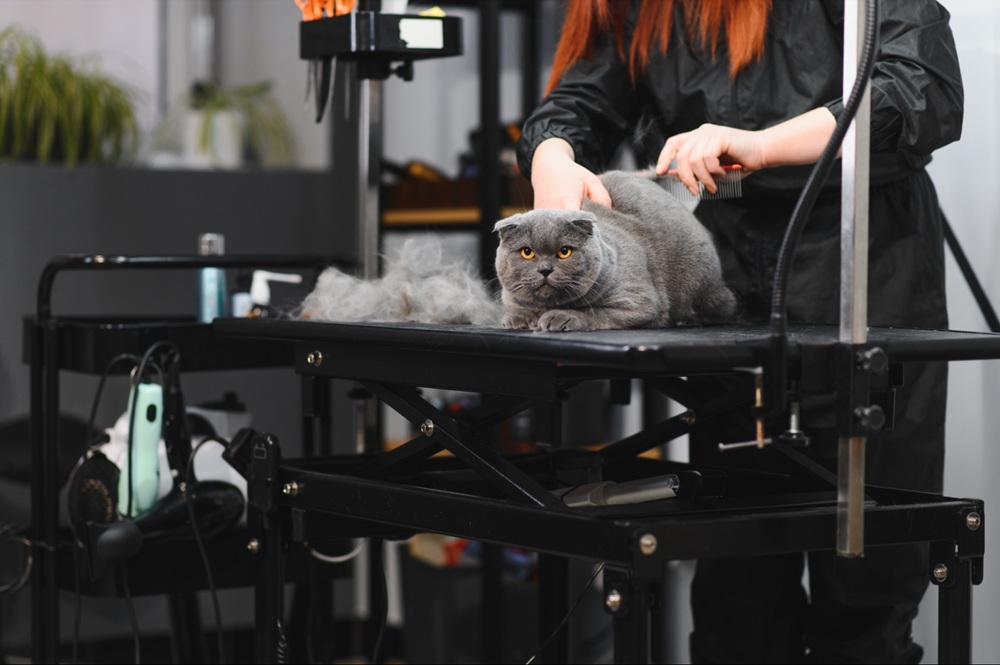
Cats can be sensitive and easily stressed during grooming. Even experienced groomers know that a sudden noise, unfamiliar surface, or unexpected movement can disrupt the entire session.
These cat grooming tips offer practical ways to keep cats calm, safe, and comfortable while helping you maintain an efficient grooming workflow.
Preparing for a Stress-Free Cat Grooming Session
A smooth grooming experience begins with a thoughtful setup. Reducing surprises early helps the rest of the session go more comfortably.
Set up the grooming environment
Choose a quiet area away from barking dogs and heavy dryer noise. Use non-slip mats to help cats feel secure, and keep lighting soft. A stable, predictable space helps cats settle quickly and reduces startle responses.
Gather all tools beforehand
Before the cat arrives, set out everything you need. Scrambling for brushes, clippers, or towels mid-session can startle a nervous cat. Preparing your tools also helps you maintain a steady, efficient workflow.
Introduce cats slowly and gently
Give each cat a moment to take in the space and sniff the tools. This brief acclimation time helps reduce fear and gives you a sense of their comfort level before you begin hands-on work.
Essential Cat Grooming Techniques
Once the cat feels grounded, you can start grooming with controlled, gentle handling.
Brushing and dematting
Long-haired cats benefit from slicker brushes and metal combs, while short-haired breeds often respond well to softer brushes. Work in small sections to avoid pulling the skin. If you find tight mats, support the skin and move slowly. Severe matting may require careful clipping rather than brushing.
Bathing tips for cats
Use lukewarm water and a gentle sprayer to avoid startling the cat. Support their body securely throughout the bath and leave the head for last to prevent stress. Start with towel drying, then use a quiet, cat-safe dryer if tolerated. Calm, steady movements reduce anxiety during this step.
Nail trimming and ear cleaning
Trim only the tip of each nail, making sure to avoid the quick, and hold the paw lightly but securely. For ear cleaning, use a cat-safe solution and cotton pads. Never insert anything into the ear canal. Slow pacing and reassurance encourage cooperation and reduce risk.
Once the hands-on grooming begins, it’s important to watch for signs of stress. Recognizing early discomfort helps keep both the groomer and the cat safe.
How Can You Tell if a Cat is in Distress
Recognizing early signs of stress helps you adjust your approach before the cat becomes overwhelmed.
Behavioral signs of stress
Common behaviors include:
- Hissing or growling
- Crouching or attempting to flee
- Tail flicking
- Increased vocalization
These cues indicate the cat is uncomfortable and may need a short pause.
Physical signs of stress
Look for panting, dilated pupils, stiff body posture, or sudden shedding. These signs often mean the cat is becoming overstimulated. Learning how to recognize when a cat is distressed based on physical cues helps you adjust your handling before the cat becomes overwhelmed.
Immediate actions to calm a distressed cat
Pause the session and give the cat a moment to reset. A towel wrap or calming pheromone spray can help some cats relax. If the cat’s stress continues to escalate, it’s safer to stop the session and advise the owner.
After identifying potential stress signals, it’s important to reinforce overall safety and handling best practices.
Grooming Safety and Best Practices
Strong handling skills and safe equipment use create a secure environment for both the cat and the groomer.
Protect yourself and the cat
Protective gloves may help with particularly nervous or reactive cats. Your goal is steady cooperation, not force.
Use tools and equipment safely
Choose tools designed for feline grooming. Quiet clippers and dryers help minimize stress. Always check clipper blades for heat buildup and ensure equipment is functioning properly before use.
Hygiene and sanitation
Clean and disinfect tools between cats to prevent infection. Wipe down grooming tables, mats, and dryers regularly. Fresh towels and clean surfaces communicate professionalism and protect pet health.
After establishing safe handling and sanitation standards, the next opportunity for improvement is optimizing daily workflow and scheduling.
Efficient and Stress-Free Cat Grooming Tips
Small workflow adjustments can make cat grooming easier and more predictable.
Scheduling and workflow
Stagger cat appointments and build buffer time for nervous pets. Tools like DaySmart Pet scheduling help you manage capacity and avoid overbooking on busy days.
Client communication
Clear communication sets expectations and reduces stress. Pre-groom questionnaires and simple at-home prep tips can improve the cat’s experience. Automated reminders and digital forms through DaySmart Pet communication tools help reduce no-shows and cut down on back-and-forth calls.
Leveraging technology
Digital notes make it easier to track grooming preferences, behavior patterns, and special handling instructions. DaySmart Pet operations keeps records organized, and integrated checkout tools like DaySmart Pet payments streamline the end of each appointment so your team can stay focused on pet care.
Confident and calm cat grooming
Safe, comfortable grooming relies on preparation, attentive handling, and early recognition of stress signals. When groomers create a calming environment, move at a steady pace, and adjust their approach as needed, cats respond with more predictable behavior. With consistent techniques and supportive tools, every session becomes safer, smoother, and more enjoyable for cats, clients, and grooming teams.
Want calmer, more predictable feline appointments? Start a free trial of DaySmart Pet to streamline scheduling and communication.